

Crafting a bong at home might sound like a daunting task, but it’s easier than you think—and a lot more fun! Imagine impressing your friends with your DIY skills while enjoying a smooth hit from a creation that’s uniquely yours. Whether you’re a seasoned pro or a curious newbie, this guide will walk you through the process with a sprinkle of humor and a dash of creativity.
Forget the overpriced head shops; who needs them when you can turn everyday items into a masterpiece? With just a few household supplies and a little ingenuity, you’ll be on your way to becoming the MacGyver of smoking accessories. So grab your supplies and let’s dive into the world of homemade bongs, where the only limit is your imagination (and maybe your plumbing skills).
Understanding Bongs: A Quick Overview
Bongs are popular smoking devices designed to filter and cool smoke before inhalation. Made of glass, plastic, or metal, they consist of a bowl or a downstem where the substance is placed. Users fill the chamber with water, which helps to trap unwanted impurities.
Many enthusiasts appreciate bongs for their ability to produce smoother hits. The water filtration process assists in reducing harshness, making for a more enjoyable experience. Additionally, the size and shape of a bong can greatly influence the smoking experience, providing different levels of diffusion and cooling.
Common types of bongs include straight-tube, beaker, and percolator designs. Each style offers unique benefits, such as ease of use or enhanced filtration. Straight-tube bongs provide simplicity, while beaker bongs increase stability. Percolators, on the other hand, add extra filtration through multiple chambers.
When selecting a homemade bong option, consider everyday materials like plastic bottles or fruit. These items allow for creative expression and personalization. Various accessories can enhance the functionality of a homemade device, including bowl pieces or downstems.
Understanding bongs contributes to the overall enjoyment and safety of the smoking experience. Awareness of their design and function guides users in making informed choices. Knowing the basics aids in crafting a personalized bong that suits individual preferences and needs.
Materials Needed for Crafting a Bong
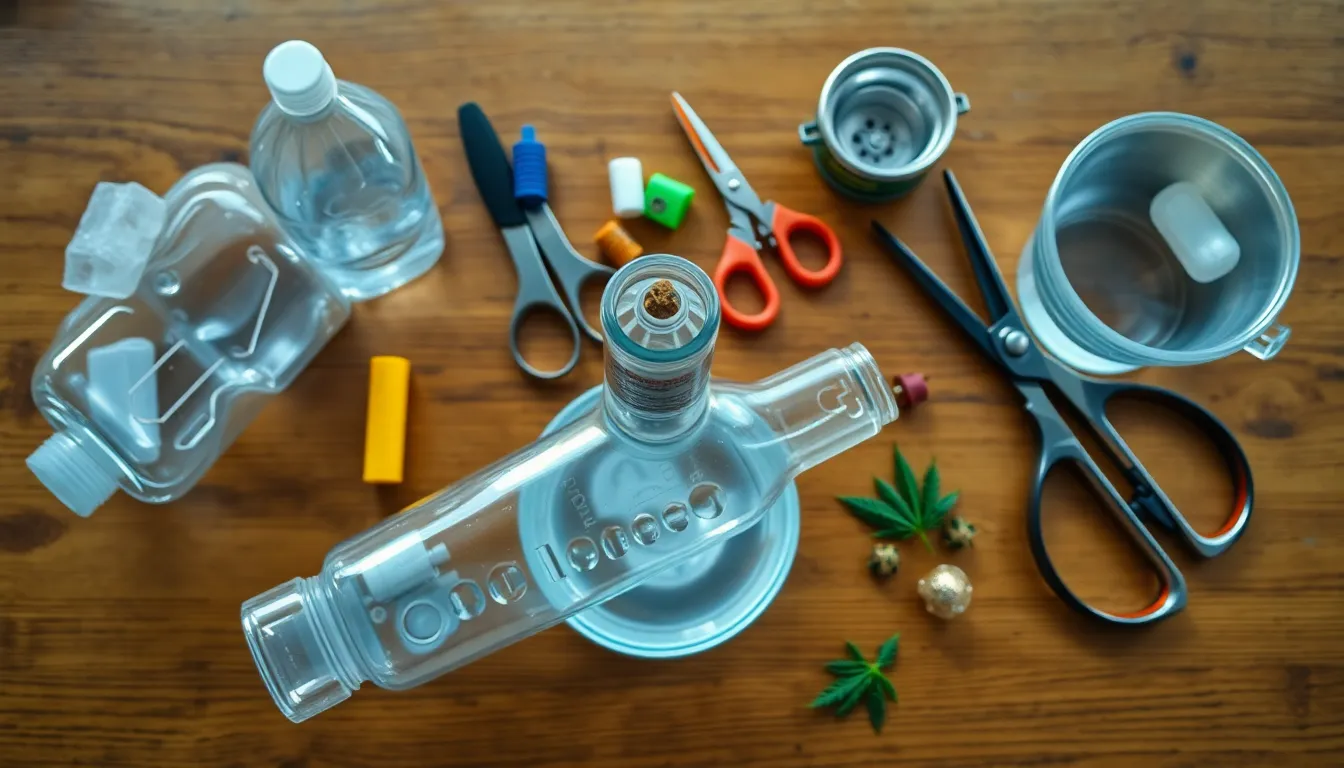
Crafting a homemade bong requires basic materials. This section outlines necessary items and optional accessories for enhancing the smoking experience.
Common Household Items
Many common items suffice for creating a functional bong. A plastic bottle, such as a soda or water bottle, often serves as a solid base. Scissors or a knife can cut the bottle and create openings for airflow. A metal bowl or a socket acts as the bowl for holding the smoking material. Additionally, a straw or small tube functions effectively as the downstem. Water plays a crucial role in filtering smoke, so a small amount fills the base before use.
Optional Accessories
Certain accessories can enhance the bong experience. Ice cubes may cool the smoke further, making inhalation smoother. Percolators, which can be added to the design, filter smoke through water multiple times for a cleaner hit. A carbon filter removes additional impurities, supporting improved flavor. Decorative elements, such as stickers or paint, personalize the bong, adding a creative touch. Finally, a cleaning solution helps maintain the bong’s hygiene, ensuring optimal performance.
Step-by-Step Guide on How to Make a Bong at Home
Creating a homemade bong involves careful consideration and creativity. Follow these steps for a successful project.
Choosing the Right Design
Selecting an effective design enhances the smoking experience. Popular designs include straight-tube and beaker styles, each offering distinct advantages. Straight-tube bongs provide simplicity, while beaker models offer stability and increased water capacity. Consider adding a percolator for added filtration. Determine which features matter most, as this choice influences smoke quality and ease of use.
Assembling the Bong
Gather all necessary materials for assembly. Start with a clean plastic bottle as the base, making a hole near the bottom for the downstem. Use a metal bowl or socket for the smoking material, attaching it securely at an angle. A straw or small tube serves as the downstem, extending into the water chamber. Fill the bottle with enough water to cover the downstem’s lower section. Ensure everything fits snugly to prevent leaks.
Safety Tips When Making a Bong
Crafting a bong at home requires careful consideration of safety. Always use materials that are safe for smoking. Avoid toxic substances or items that can release harmful chemicals when heated.
Wear gloves when handling sharp tools or cutting materials. This reduces the risk of injury during assembly. Keep the workspace clean and organized to prevent accidents. Make sure to have proper ventilation while working. Poor air quality can lead to inhalation of dust or fumes.
Test the stability of the bong before use. Ensure that all parts fit securely to prevent leaks or spills. Fill the bong with water to the correct level. Too much water can cause splashing, while too little may not effectively filter smoke.
Consider using food-safe materials. This ensures that no harmful compounds leach into the smoke. Use heat-resistant items for parts exposed to flames. Metal bowls typically work well, while plastic components may not withstand high temperatures.
Also, store the homemade bong safely away from children or pets. Instruct others on proper handling techniques to avoid breakage. Discard damaged or worn parts promptly. Regular maintenance keeps the bong in optimal condition.
Follow these tips to create a safer smoking experience, ensuring enjoyment without unnecessary risks. Prioritize safety to ensure the project remains a fun and creative pursuit.
Crafting a homemade bong can be a fun and rewarding experience. By using everyday items and following simple steps, anyone can create a personalized smoking device that suits their preferences. This DIY approach not only saves money but also allows for creativity and experimentation with different designs and features.
Safety should always be a priority during the crafting process. By choosing the right materials and maintaining a clean workspace, users can ensure a safe and enjoyable smoking experience. Regular maintenance of the bong will enhance its performance and longevity.
With a little effort and imagination, anyone can enjoy smoother hits and a unique smoking accessory right at home.


