
For many, mornings aren’t complete without that perfect cup of coffee. But let’s face it, brewing a stellar cup at home can feel like trying to solve a Rubik’s Cube blindfolded. Fear not, aspiring baristas! With just a few tricks up your sleeve, you can transform your kitchen into a coffee haven that rivals your favorite café.
Understanding Coffee Beans
Coffee beans serve as the foundation for a great cup of coffee. Various factors, such as bean type and roast preference, influence flavor profiles and overall experience.
Types of Coffee Beans
Arabica and Robusta are the two main types of coffee beans. Arabica beans account for about 60-70% of global coffee production. These beans feature a sweet, smooth flavor with higher acidity. Robusta beans, making up around 30-40% of production, offer a stronger, more bitter taste with earthy undertones. Specialty varieties, like Liberica and Excelsa, present unique flavors as well, providing adventurous coffee enthusiasts with exciting options.
Choosing the Right Roast
Understanding roast levels is crucial for achieving desired flavors. Light roasts preserve the original characteristics of the beans, emphasizing fruity and floral notes. Medium roasts balance acidity and body, yielding well-rounded flavors. Dark roasts produce bold, rich tastes with pronounced bitterness, often appealing to those who enjoy deeper profiles. Selecting a roast that aligns with personal taste preferences is essential for crafting the best coffee experience at home.
Essential Coffee Brewing Equipment
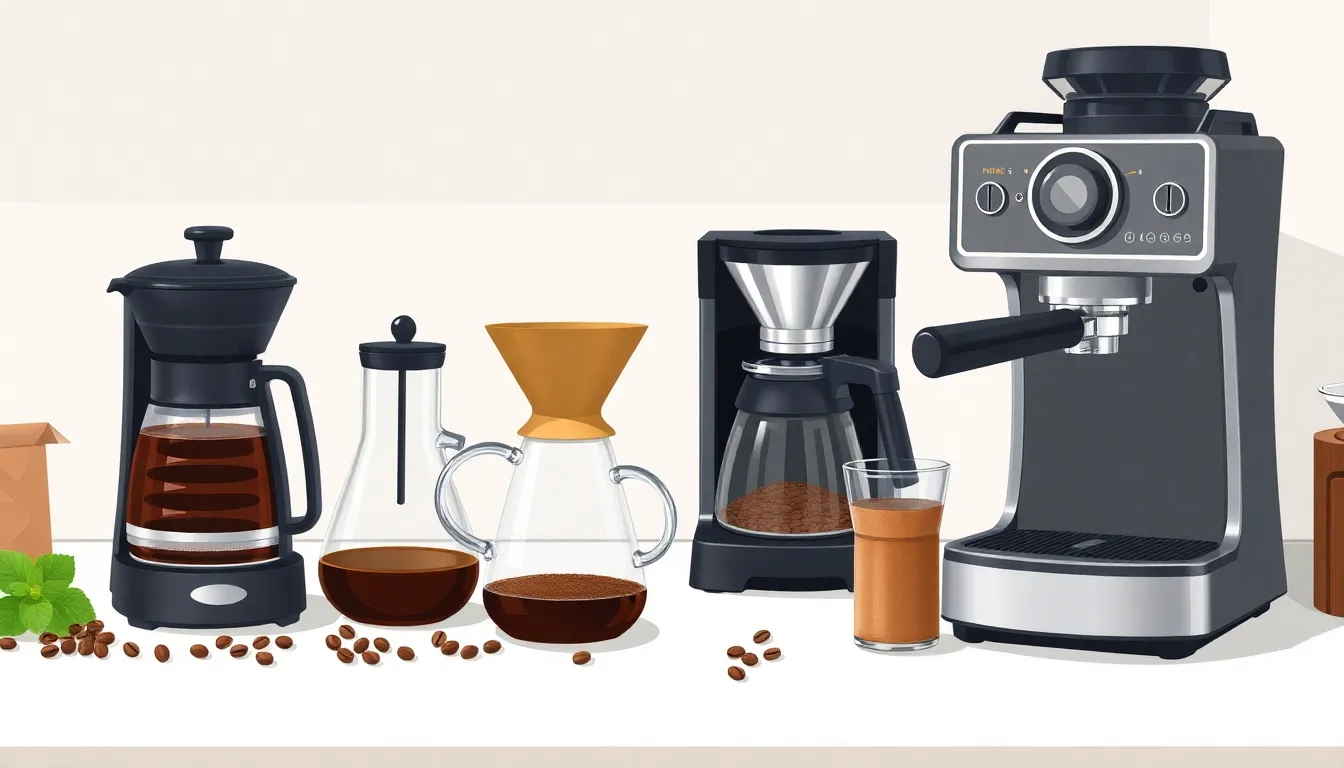
Investing in quality equipment significantly enhances home coffee brewing. Choosing the right tools ensures the best possible flavors and aromas from coffee beans.
Coffee Makers Overview
Different coffee makers offer various brewing methods. Drip coffee makers provide convenience for daily use, making them popular among many households. French presses deliver a rich and full-bodied flavor, perfect for those who enjoy a bolder cup. Pour-over devices offer precision, allowing users to control every aspect of brewing, from timing to water temperature. Espresso machines enable the creation of concentrated coffee, ideal for lattes and cappuccinos. Selecting a coffee maker depends on personal preferences and brewing styles.
Grinders and Their Importance
Freshly ground coffee beans maximize flavor and aroma. Burr grinders consistently produce uniform grounds, essential for balanced extraction. Blade grinders, while more affordable, often result in uneven particle sizes, which can lead to inconsistent brewing. Grinding just before brewing retains the beans’ freshness and oils, enhancing the overall coffee experience. Understanding the grind size needed for different brewing methods, such as coarse for French press or fine for espresso, also matters significantly. Investing in a good grinder will elevate the morning routine.
Brewing Techniques for Perfect Coffee
Mastering brew techniques leads to exceptional coffee at home. Each method offers unique flavors and experiences.
Pour Over Method
Pour-over coffee emphasizes precision and control. He first places a filter in the cone and pre-wets it, ensuring optimal extraction. Next, he adds freshly ground coffee, typically using a medium-fine grind. He slowly pours hot water over the grounds in a circular motion, allowing even saturation. Water temperature should hover around 200°F for the best results. This technique highlights the coffee’s nuanced flavors, creating a clean and aromatic cup.
French Press Method
French press coffee provides a rich, full-bodied flavor. It requires coarse grounds, which allows for proper infusion. He begins by adding coffee to the press, using a standard ratio of 1:15 coffee to water. After boiling water, he pours it over the grounds and stirs gently. A four-minute steep time works well to extract the oils and flavors. Finally, he presses down the plunger, separating the grounds from the brewed coffee, resulting in a robust cup with a unique texture.
Espresso Method
Espresso is concentrated and bold, requiring finely ground coffee beans. He packs the grounds tightly into the portafilter, ensuring an even extraction. Using an espresso machine, he forces hot water through the grounds at high pressure. This process creates a thick, rich shot topped with crema. A standard extraction lasts about 25-30 seconds, producing a strong, flavorful base for drinks like lattes and cappuccinos. Proper technique elevates espresso from average to exceptional.
Enhancing Your Coffee Experience
Crafting an exceptional coffee at home goes beyond just selecting beans and brewing methods. It’s about elevating flavors and techniques to create a personal, enjoyable coffee ritual.
Adding Flavors and Spices
Enhancing coffee with flavors and spices opens up endless possibilities. Cinnamon complements coffee’s natural sweetness, while vanilla extract adds richness. Nutmeg provides warmth and a hint of spice, perfect for cozy mornings. Exploring flavored syrups can introduce diverse tastes, making every cup unique. Chocolate or caramel drizzles transform an ordinary drink into a dessert-like delight. Experimenting with these additions allows for a personalized experience, catering to individual preferences and moods.
Perfecting Milk Frothing
Perfect milk frothing creates creamy textures and enhances coffee beverages. Using whole milk allows for better frothing, but alternatives like almond or oat milk work too. A steam wand or milk frother works best for foamy creations. Heating milk to the right temperature is crucial; around 150°F yields optimal results. Incorporating air while frothing develops microfoam, essential for lattes or cappuccinos. Mastering this technique boosts the aesthetic and sensory appeal of coffee, providing a café-like experience right at home.
Common Mistakes to Avoid
Several common mistakes can hinder the quest for the perfect cup of coffee at home. Avoiding these pitfalls enhances overall flavor and enjoyment during each coffee experience.
Over Brewing Issues
Over brewing leads to bitter and undesirable flavors. Extracting coffee for too long can result in an unpleasant taste. Monitoring the brewing time is crucial; he recommends sticking to specific time frames depending on the brewing method. For instance, French press coffee usually brews best between four and five minutes. A drip coffee method typically ranges from four to six minutes. Adjusting the brew time based on personal preferences and coffee types significantly improves the final taste.
Water Quality Concerns
Water quality plays a vital role in brewing coffee. Using tap water with strong chlorine or mineral flavors adversely affects coffee taste. Filtering water or using bottled water often yields better results. Experts suggest aiming for water with a balanced mineral content for an optimal brewing experience. The recommended temperature for brewing water should be between 195°F and 205°F. This range enhances extraction without scalding the coffee. Prioritizing water quality and temperature leads to deeper, richer flavors in the final cup.
Brewing the perfect cup of coffee at home is an art that anyone can master. With the right beans and equipment combined with effective brewing techniques, it’s possible to create a delightful coffee experience. Personalizing each cup with flavors and perfecting milk frothing adds a special touch that elevates the ritual.
Avoiding common mistakes can further enhance the quality of every brew. By paying attention to details like water quality and brewing times, coffee lovers can enjoy a café-like atmosphere right in their kitchens. Embracing these practices not only transforms morning routines but also brings joy to every sip.


