
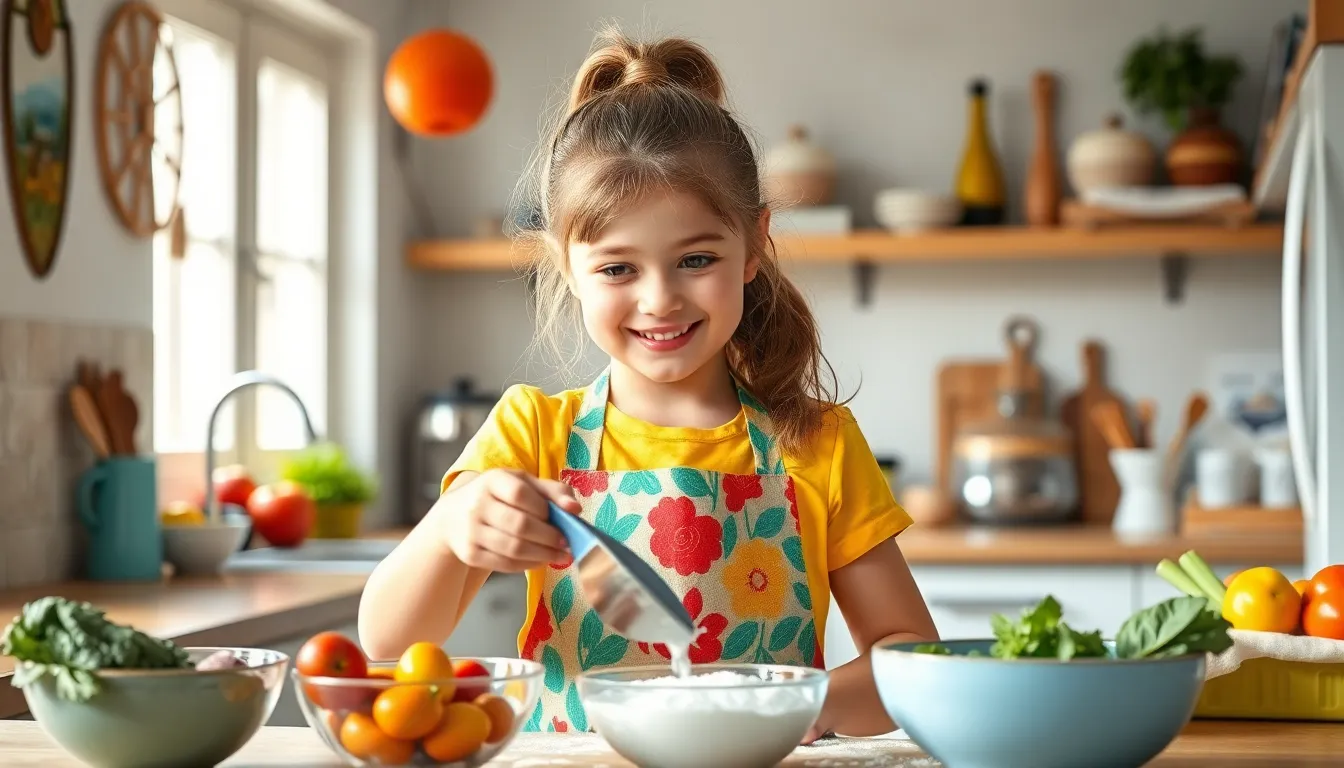
Picture this: a bustling kitchen where flour flies, pots clank, and kids are enthusiastically measuring ingredients like little chefs in training. Involving children in cooking isn’t just about whipping up a meal; it’s a secret recipe for fun, learning, and lasting memories. Who knew that teaching kids to crack an egg could also crack open their creativity?
Benefits of Kids Helping in the Kitchen
Involving kids in the kitchen offers numerous advantages, spanning life skills to nutrition education. Cooking together provides a platform for learning and growth.
Developing Life Skills
Kids gain essential life skills while cooking. They enhance their measuring abilities when following recipes. Teamwork occurs naturally as they collaborate with adults. Developing patience comes from waiting for food to cook. Confidence builds through completing tasks independently, such as stirring or garnishing. Practical skills like chopping and mixing foster independence in the kitchen. Each of these activities contributes to a child’s overall personal development.
Encouraging Healthy Eating Habits
Healthy eating habits often begin in the kitchen. When kids participate in meal preparation, they discover new foods firsthand. Exposure to fresh ingredients increases interest in fruits and vegetables. Understanding basic nutrition becomes easier as they learn about balanced meals. Participation in cooking creates awareness of portion sizes and healthy choices. Preferences can shift toward healthier options as they take on ownership of their meals. Enthusiasm for cooking nurtures a positive relationship with food, promoting lifelong habits.
Age-Appropriate Tasks for Kids
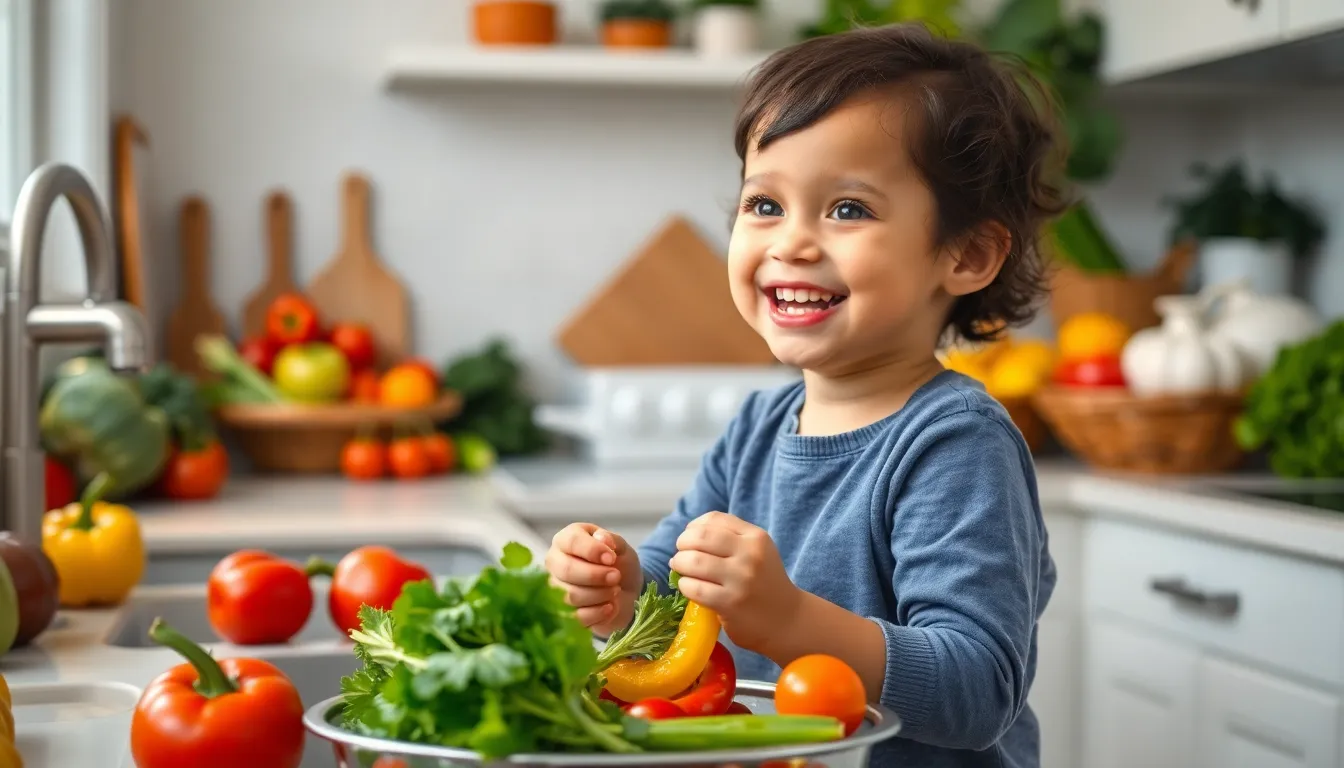
Engaging kids in kitchen tasks enhances their learning experience. Each age group can contribute in meaningful ways, fostering their confidence and skills.
Toddlers in the Kitchen
Toddlers can start with simple, safe activities. They enjoy washing vegetables and tearing leafy greens. Measuring dry ingredients like flour or rice appeals to their curiosity. Cracking eggs is another fun task, encouraging fine motor skills. With supervision, using cookie cutters helps them explore shapes and creativity in food. These small contributions instill a sense of accomplishment in toddlers.
School-Aged Children
School-aged children can manage more complex tasks. They often enjoy measuring liquids and mixing ingredients. Chopping soft fruits or vegetables with kid-friendly tools can be both safe and productive. Following simple recipes fosters their reading skills and comprehension. Setting the table or cleaning up afterward builds responsibility and teamwork. Encouraging them to plan meals develops their organizational skills. Active participation in these tasks reinforces their growing independence.
Teenagers Taking the Lead
Teenagers are ready to tackle nearly every kitchen task. They can follow advanced recipes and prepare entire meals independently. Gaining experience with techniques like sautéing and baking adds to their culinary skills. Managing time effectively during meal preparation boosts their efficiency. Sharing recipes with family or friends encourages leadership and communication. Teenagers can also explore dietary preferences, learning about nutrition while enhancing their cooking repertoire. These experiences prepare them for future self-sufficiency.
Tips for Involving Kids in Cooking
Involving children in cooking activities can be a joyful experience. Here are some effective tips.
Creating a Safe Environment
Safety in the kitchen is crucial. Designate a child-friendly area where children can safely work alongside adults. Use non-slip mats to prevent slips and falls. Store sharp knives and utensils out of reach. When older children chop vegetables, provide adequate supervision. Teach them proper knife handling techniques to minimize risks. Keep hot surfaces and appliances hidden or inaccessible to younger ones. Encourage children to wash their hands regularly to promote hygiene. By establishing safety measures, parents create a space where kids can explore cooking confidently.
Making it Fun and Engaging
Fun engages children and fosters a lasting interest in cooking. Incorporate colorful ingredients like bell peppers and strawberries to make meals visually appealing. Use creative themes, such as making animal-shaped sandwiches or DIY pizzas, to spark excitement. Allow children to choose recipes that interest them, promoting their involvement. Create a cooking playlist with their favorite songs to enhance the atmosphere. Involve them in decorating meals or setting the table, adding an artistic aspect. Celebrate cooking successes with family taste tests to build motivation. Through enjoyable experiences, kids develop positive associations with cooking that last a lifetime.
Challenges and Solutions
Engaging kids in the kitchen presents challenges alongside benefits. Addressing these concerns ensures a positive experience for everyone.
Overcoming Mess and Chaos
Mess can discourage parents from involving kids in cooking. Establishing designated work areas reduces clutter and confines spills to specific spots. Organizing ingredients and tools eases cleanup. Choosing recipes with fewer steps leads to less mess overall while keeping children engaged. Expect that some messes will occur, and approach cleanup as a shared activity, fostering teamwork and responsibility. Celebrating each success, regardless of the chaos, transforms kitchen time into an enjoyable learning experience.
Addressing Picky Eaters
Picky eating often complicates cooking with children. Involving kids in recipe selection empowers them to try new ingredients. Highlighting the benefits of each recipe encourages open-mindedness. Cooking together exposes children to unfamiliar flavors, making them more likely to experiment. Suggesting fun presentations, like creating shapes with fruits or vegetables, can stimulate interest. Repeated exposure to various foods, presented in appealing ways, often helps kids gradually expand their palates while enjoying the process.
Engaging kids in the kitchen offers a wealth of benefits that extend far beyond meal preparation. It cultivates essential life skills while fostering creativity and confidence. By involving children in cooking, parents create an environment where learning becomes enjoyable and memorable.
From toddlers to teenagers, each age group can contribute meaningfully, enhancing their development in various ways. With the right guidance and a focus on safety, cooking can transform into a fun family activity that builds lasting bonds.
Ultimately, the kitchen becomes a space for growth and exploration, setting the foundation for healthy eating habits and a positive relationship with food. Embracing this journey together not only enriches children’s lives but also strengthens family connections.


