
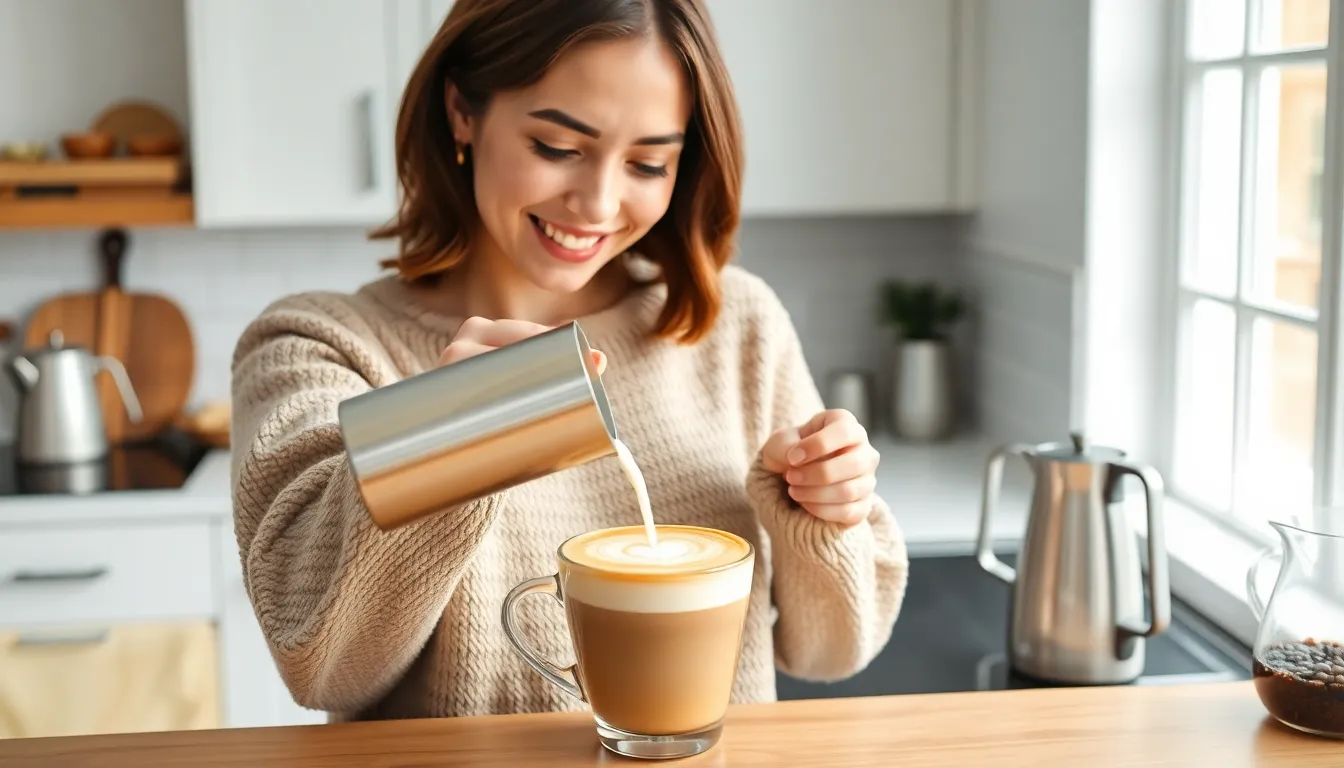
Imagine waking up to the rich aroma of freshly brewed coffee wafting through your kitchen, promising a delightful start to the day. Now picture yourself crafting that perfect latte without stepping foot outside. Making a latte at home isn’t just a skill; it’s a superpower that transforms ordinary mornings into café-worthy experiences.
Why Make Latte At Home?
Creating a latte at home offers several benefits. Convenience ranks high among them. No need to visit a café when access to quality ingredients makes brewing a latte simple.
Cost savings also play a significant role. Making coffee beverages at home eliminates the expense of daily café visits. Individuals can invest in quality supplies once rather than paying for multiple lattes over time.
Customization stands out as another advantage. Home brewers can experiment with flavors, milk types, and sweetness. Preferences change from day to day, and having control over ingredients allows for a unique experience each time.
Health considerations also factor into the decision. Many commercial beverages contain hidden sugars and calories. By preparing lattes at home, anyone can control what goes into their drink and create healthier options.
Quality matters. With the right tools and techniques, individuals can craft café-quality lattes. Ensuring fresh, quality coffee and milk leads to better taste than many ready-made alternatives.
Time efficiency often gets overlooked. Making a latte at home takes just moments, especially with practice. The process quickly transforms into an enjoyable routine rather than a drawn-out endeavor.
Community connection can emerge from sharing homemade lattes with friends and family. Inviting others to enjoy a personal creation fosters interaction and camaraderie.
Lastly, crafting a latte becomes a creative endeavor. The art of frothing milk and pouring designs fosters skill development and passion. Embracing this aspect can turn a simple drink into a personal statement.
Essential Ingredients for Homemade Latte
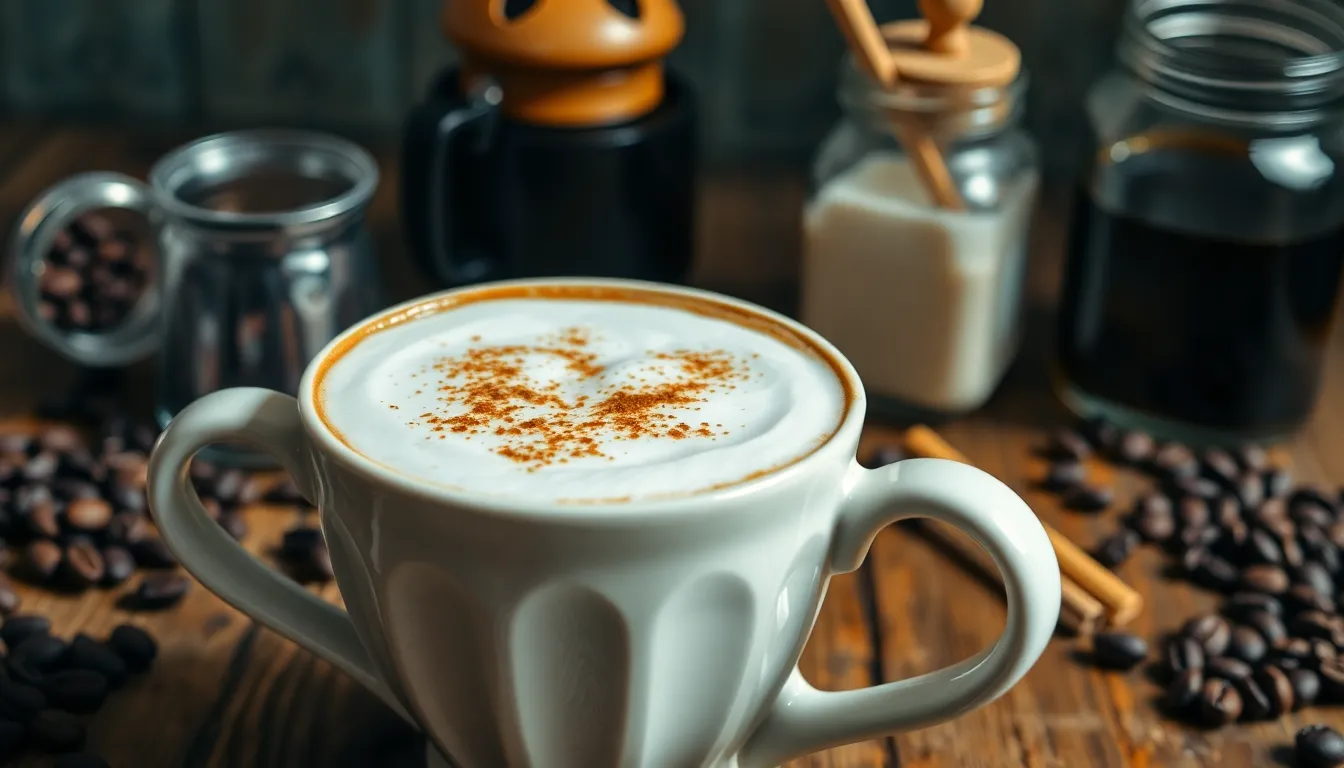
Creating a delicious homemade latte requires a few essential ingredients to achieve that perfect café-quality taste.
Coffee Selection
Selecting quality coffee beans makes a significant difference in flavor. Espresso beans, which are typically darker roasted, provide a rich base. Some prefer medium roast for a smoother taste. Grinding the beans fresh enhances the aroma and flavor. A fine grind mimics café espresso texture. Experts recommend using approximately two tablespoons of coffee for a standard double shot.
Milk Choices
Choosing the right milk impacts the texture and taste of the latte. Whole milk creates a creamy, rich flavor, while 2% milk produces a nice balance between creaminess and lightness. Alternatives, like almond or oat milk, cater to various dietary preferences. Ensure the milk is cold for frothing. Some brands froth better than others, so test different options to find the best fit for your latte.
Flavoring Options
Flavoring your latte adds a personal touch. Common options include vanilla, caramel, or hazelnut syrups for sweetness. Using just one to two pumps of syrup keeps it balanced. Fresh spices like cinnamon or nutmeg can enhance the coffee’s depth. Whipped cream or foam toppings elevate presentation. Remember to experiment with different combinations for unique flavors.
Equipment Needed for Brewing
Creating a latte at home demands specific equipment to ensure the best results. Using the right tools elevates the brewing process.
Espresso Machine
An espresso machine serves as the cornerstone for making lattes. It produces rich, concentrated coffee shots essential for a flavorful base. Options range from manual to automatic, catering to varying skill levels. High-quality models feature programmable settings and built-in grinders. A machine with consistent pressure delivers superior espresso shots, crucial for taste and texture. For those on a budget, stovetop espresso makers offer a viable alternative. Selecting a machine that suits personal preferences enhances the overall latte-making experience.
Milk Frother
A milk frother is vital for achieving the creamy texture of a latte. Devices vary from handheld frothers to steam wands found in espresso machines. Frothing creates microfoam, which adds richness to the beverage. Using cold milk generally yields better froth due to its ability to expand. Creatively, frothers can also produce different textures, allowing for unique drink variations. Investing in a quality frother facilitates experimenting with milk alternatives like oat or almond milk. An effective frother significantly impacts the overall quality and enjoyment of homemade lattes.
Step-by-Step Guide to Make Latte At Home
Making a latte at home involves a few straightforward steps that result in a delicious beverage. Following this guide will ensure a cafe-like experience right in the kitchen.
Preparing the Coffee
Start by selecting quality espresso beans. Freshly grinding the beans leads to enhanced flavor extraction. Use about 18-20 grams of coffee for a double shot. Brew the espresso using an espresso machine, stovetop maker, or Aeropress. Ensure the water temperature stays around 190-200°F for optimal brewing. Aim for a brewing time of 25-30 seconds to achieve richness in taste.
Frothing the Milk
Use cold milk for better frothing results. Whole milk creates a creamier texture, while alternatives like oat or almond milk also froth well. Heat the milk to about 150°F, but avoid boiling it. Use a milk frother or steam wand to create microfoam that contributes to the drink’s richness. Move the frothing wand around for even texture and to incorporate air into the milk. The goal is to create smooth, glossy foam that sits atop the espresso.
Assembling Your Latte
Combine the espresso and steamed milk for the final assembly. Pour the steamed milk into the espresso while holding back the foam with a spoon. After pouring most of the milk, gently spoon the foam on top. Optionally, create latte art by manipulating the pour. Add flavorings such as vanilla syrup or sprinkle cocoa powder for extra taste. Enjoying a homemade latte showcases both skill and creativity.
Tips for the Perfect Homemade Latte
Selecting the right coffee beans is crucial for quality. Opt for freshly roasted espresso beans for a robust flavor. Grinding the beans just before brewing enhances aroma and taste significantly.
Emphasizing temperature plays a critical role in frothing milk. Cold milk achieves better froth than warm milk. Aim for a milk temperature around 150°F to 160°F for the best results.
Utilizing the right frothing technique matters too. Move the frother in a circular motion to introduce air into the milk, creating microfoam. Experimenting with different types of milk can yield various textures, making oat or almond milk exciting alternatives.
Incorporating flavors brings personalization into every latte. Syrups like vanilla or caramel can elevate your drink’s profile. Consider adding spices, such as cinnamon or nutmeg, for an extra layer of complexity.
Noticing ratios can enhance drink balance. A general guideline is one part espresso to three parts milk, but personal preference plays a huge role. Adjusting the espresso amount can create different flavor intensities.
Practicing latte art not only impresses but also adds creativity. Pouring techniques can shape beautiful designs. With patience, crafting hearts or rosettas becomes an achievable goal.
Cleaning equipment regularly ensures longevity and optimal performance. Rinsing the milk frother after each use prevents residue buildup. Regular maintenance keeps espresso machines in top condition for consistent results.
Lastly, sharing homemade lattes creates connections. Enjoying a perfected drink with friends or family amplifies the experience. The joy of teaching someone else the process can enhance appreciation for homemade coffee creations.
Making a latte at home can transform the daily coffee ritual into an enjoyable and personalized experience. With the right ingredients and equipment anyone can create café-quality beverages that suit their taste preferences. The joy of experimenting with flavors and mastering frothing techniques not only enhances the drink but also fosters creativity.
Sharing these homemade lattes with friends and family adds a social element that deepens connections. By embracing this skill individuals can save money while enjoying the convenience of brewing their favorite drinks at home. Ultimately the art of latte-making is about more than just coffee; it’s about crafting moments of joy and connection in everyday life.


